Six primes, one technician up the coast and the flare that made Salt Flats look like itself.
Why old lenses
Modern glass is very good at being invisible. That is usually what you want. For Salt Flats it was not. The brief asked for a car film that did not look like a car advert, and nothing looks more like a car advert than a perfectly clean, perfectly sharp frame. We wanted edges that softened, highlights that bloomed and a flare that drew a line across the frame when the sun came round.
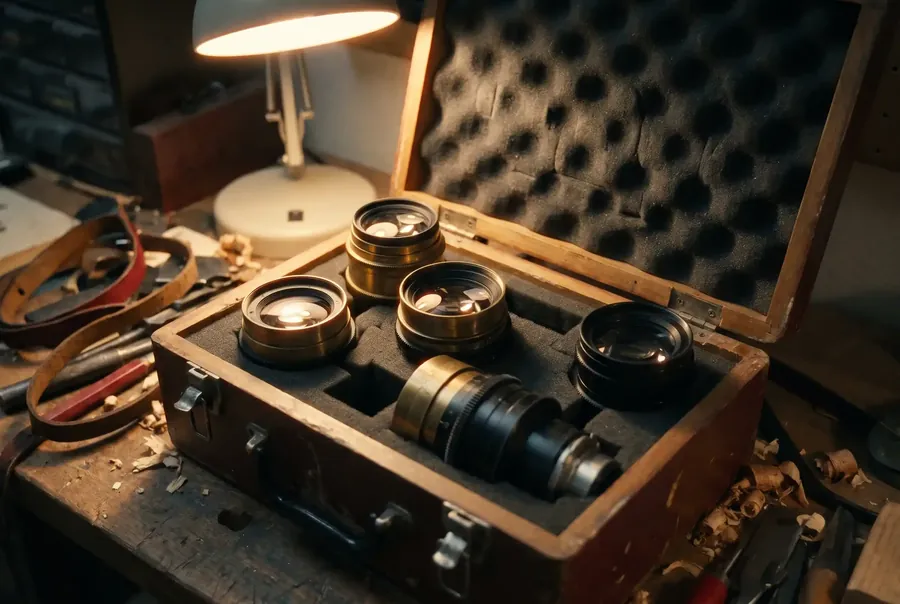
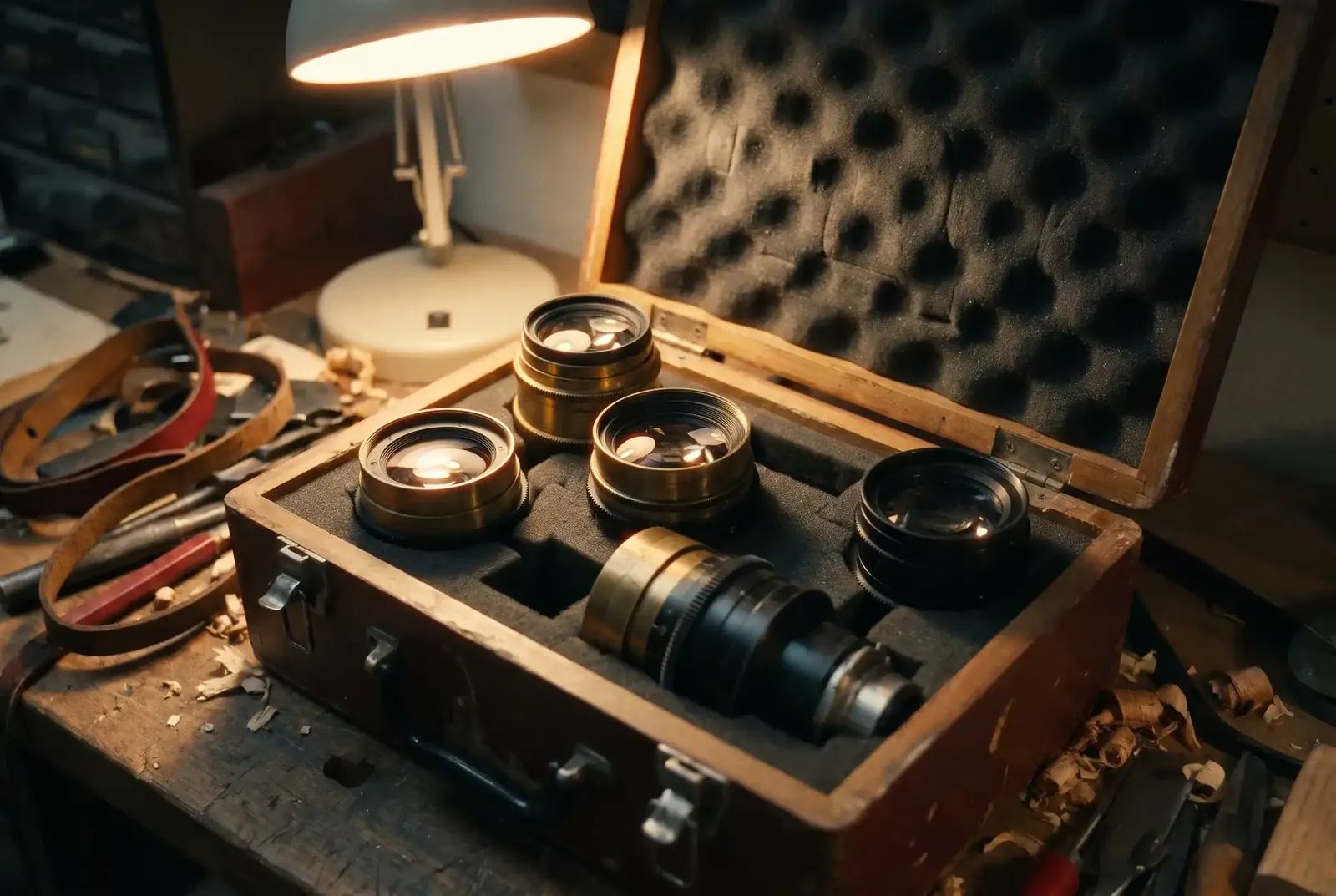
We found a set of 1960s anamorphic primes that had spent twenty years in a cupboard. Two had fungus. One had a stiff focus ring. All six had the look.
Character is a nice word for a lens that has to be fixed before you can use it.
Rehousing, not restoring
We did not want the glass changed, only the mechanics around it. A technician we have worked with for a decade cleaned the elements, left the coatings alone and built new housings with modern gears and a common front diameter. Four months, one invoice we will not print here, and a set that now behaves like a rental kit.
- Standard gear positions, so focus pullers do not relearn every lens.
- Matched front diameters, so one matte box fits the whole set.
- Witness marks re-engraved and checked against a chart.
- Original glass and coatings kept exactly as they were.
The lenses now live in the Berlin stage and travel to Lisbon in a padded case. We test them before every job, because old glass changes with temperature, and because the flare that sold Salt Flats will not always be the right flare for the next film.